

At the end of March 2017, my wife and I traded our usual work routine for eight nights in Tenerife. At the time, I was working as a telecom contractor, and the breaks between projects gave us the chance to travel several times a year. Tenerife turned out to be one of those trips that stayed with us: warm weather, volcanic landscapes, lively towns, good food and enough variety to make every day feel different.
This is not a checklist assembled from brochures. It is the story of the places we actually visited, illustrated with the photographs I took during our holiday. My camera for the trip was the Sony A7R II, a camera I owned and used extensively.
We based ourselves in Puerto de la Cruz and rented a car at the airport. That gave us the freedom to move from the coast to the mountains and to visit places that would have been much harder to combine using organised excursions. If you are planning a similar trip, check current access conditions before setting off, especially for protected areas and Mount Teide.
Our Tenerife holiday at a glance
- When we travelled: late March and early April 2017
- Length of stay: eight nights
- Base: Puerto de la Cruz
- Transport: a rented Fiat Albea for seven days
- Main places visited: Puerto de la Cruz, Los Gigantes, Anaga Rural Park, Teide National Park, Jungle Park and Loro Parque
- Camera: Sony A7R II
Our apartment was enormous—around 200 square metres—with an ocean view and a restaurant on the ground floor. We paid about €300 for eight nights. The hire car cost roughly €100 for seven days, including insurance. Those were the prices we paid in 2017, not current quotes, so they should be treated as a snapshot of our trip rather than a modern budget.
In total, we spent around €1,500 for the two of us without trying to travel on an especially tight budget. We ate in restaurants every day, drove around the island and visited several paid attractions. Tenerife can be enjoyed in many ways, but having a car made this particular holiday much more flexible.
Puerto de la Cruz: our base in northern Tenerife
Puerto de la Cruz was a very convenient base. It felt active without being overwhelming, the ocean was always close, and we could start the day in town before driving elsewhere on the island. We were lucky with the weather and had sunshine throughout the holiday.

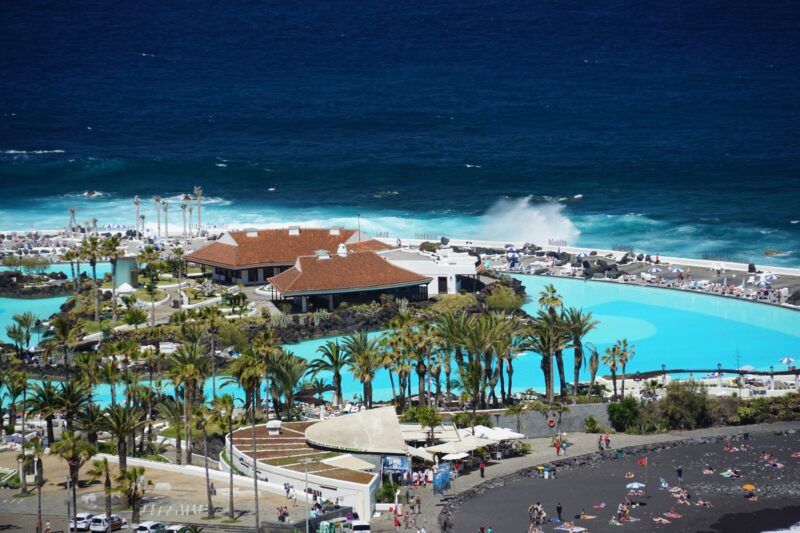

One pleasure of staying here was being able to walk out in the evening and choose somewhere to eat without making a complicated plan. During our visit we enjoyed tapas at Rosa Negra, fresh food at Saigon Delice and crepes at Advans Cafeteria-Creperia. Restaurants change over time, so I would check their current status before visiting. I also tried Dorada, the local beer, which fitted the warm evenings perfectly.
Puerto de la Cruz worked for us because it was more than somewhere to sleep. It was part of the holiday: ocean views in the morning, streets to explore later in the day and an easy starting point for our drives around Tenerife.
Los Gigantes and the scale of Tenerife’s coast
The cliffs of Los Gigantes were among the clearest reminders that Tenerife is a volcanic island. Their size is difficult to appreciate until you see the dark rock rising almost straight from the ocean. The resort and marina provide a comfortable foreground, but the cliffs dominate the scene.

We found the area worth visiting even without booking a boat trip. There are places to walk, views towards the cliffs and restaurants around the marina. The contrast between the black volcanic rock, blue water and built-up coastline gives this part of Tenerife its own character.
Anaga Rural Park: the greener side of the island
Anaga felt completely different from the sunnier resort areas. The landscape is made of sharp ridges, deep ravines and dense vegetation, including laurel forest. Roads twist through the mountains, and the scenery changes quickly as clouds and light move across the slopes.
This is a place where the journey matters as much as the destination. We stopped for views and photographs rather than trying to rush through a list of landmarks. Anyone planning a walk should check routes and restrictions through the official Tenerife ON service before travelling. Conditions in protected natural areas can change, and some routes may require advance booking.


If your picture of Tenerife is only beaches and hotels, Anaga corrects it very quickly. It is rugged, green and atmospheric, and it was one of the most memorable drives of our holiday.
Teide National Park: Tenerife at its most dramatic
Teide National Park was the place that most clearly showed us the geological story of the island. The volcanic terrain can feel almost unreal: broad fields of rock, unusual formations, sparse vegetation and Mount Teide rising above everything.
The altitude and exposed landscape also make planning important. Weather near the coast does not tell you exactly what conditions will be like higher up. If you intend to use the cable car or access restricted trails, consult the official Teide visitor information and reserve anything required before your visit.


I did not carry a tripod that day, and I wished I had. A stable support would have helped me slow down and work more carefully with the landscape. Still, the photographs remind me of the scale, colour and silence of the place. For anyone interested in making better images while travelling, my travel photography guide covers the practical decisions that matter more than carrying every possible piece of equipment.
Jungle Park: birds, animals and plenty to photograph
Jungle Park gave me a very different photographic challenge. Instead of wide landscapes, I was watching for expressions, movement and brief moments when an animal turned into good light. The birds were especially impressive, from large birds of prey to colourful parrots.


The park also had lemurs, monkeys, turtles, deer and lizards. Photographing them required more patience than photographing the landscape. Fences, changing light and unpredictable movement all influence the result, so I concentrated on clean angles and waited for moments that showed the animals clearly.


Our visit took place in 2017, so anyone considering the park today should check its current programme, visitor information and animal-welfare policies before deciding whether it suits them.
Our day at Loro Parque
Loro Parque was another full day centred on wildlife. The collection ranged from parrots and other birds to penguins, fish and marine mammals. The tropical planting made the park feel dense and colourful, and there was always another subject to photograph.


These photographs and impressions describe our experience in 2017. Standards, exhibits and public expectations around captive wildlife continue to evolve, so travellers should read current information and make their own informed decision before visiting.
Was Tenerife worth it for us?
Yes, without hesitation. What made the holiday special was not one single attraction but the contrast between them. We could spend one day beside the ocean, another among green mountain ridges and another surrounded by volcanic rock at high altitude. Puerto de la Cruz gave us a comfortable base, while the hire car allowed us to see much more of the island at our own pace.
Looking back, I would plan the Teide part more carefully and take a tripod for the landscapes. I would also leave space in the schedule rather than trying to fill every day. Some of our best memories came from simply driving, stopping when a view caught our attention and taking time to look around.
The prices mentioned here belong to 2017, and practical arrangements will have changed. The personal verdict has not: Tenerife gave my wife and me a varied, beautiful and genuinely memorable holiday. If you enjoy this kind of first-hand trip story, you can find more of our journeys in the GottaPics Travel Blog.
Discover more from GottaPics
Subscribe to get the latest posts sent to your email.


 Marian Florinel Condruz