

Landscape photography records the character of a place: its shapes, light, weather and relationship between foreground and distance. A coastline, woodland, field or city skyline can all provide a landscape photograph. There is no need to exclude the sky, water or signs of human life to make the subject count.
My interest in landscape photography comes from noticing scenery worth remembering. This guide keeps that broad approach while explaining how to turn a view into a deliberate photograph. The subject comes first; techniques such as a panorama or long exposure are choices that serve it.
Seascapes: decide what the water should look like
A short exposure preserves the shape of a breaking wave. A longer one records its movement and can simplify a busy surface. Neither is inherently better: decide whether energy or calmness is the main idea.
Watch a few waves before placing the tripod. Keep clear of rising water and slippery surfaces, and allow space around the intended composition for changes in the sea. Check sharpness after wind or spray reaches the camera.

Mountains: layers matter as much as summits
You do not have to climb a peak to photograph mountains well. A view from a valley or accessible path can show overlapping ridges, cloud and the relationship between the mountain and its surroundings.
Try a longer focal length to isolate a lit ridge. A wide lens is useful when a foreground subject contributes, but an empty foreground can weaken a spectacular distant view.

Woodlands: simplify a busy scene
A woodland can look beautiful in person yet chaotic in a photograph because trunks and branches overlap. Move slowly and look for one clear arrangement: a path, a group of trees, a patch of light or a repeated shape.
Overcast weather can reduce distracting contrast, while mist can separate layers. Check the edges for bright gaps in the canopy, which may pull attention away from the main subject.

Fields and open land: find a point of interest
A field does not need a dramatic sky to work. A curved track, a lone tree or a band of flowers can organise the frame. Lowering the camera may emphasise nearby plants, but inspect whether they obscure the more important distance.
Respect crops, livestock and access boundaries. A viewpoint from a permitted path is preferable to damaging the foreground you came to photograph.

Seasons: revisit rather than collect
Returning to one location can reveal more than visiting many once. Note where the light falls, how vegetation changes and whether a familiar composition becomes stronger in fog, autumn colour or bare winter branches.
Use a previous photograph as a reference, then allow the new conditions to change your decision. Repeating the exact framing is useful for a seasonal series, but it is not an obligation.

Cityscapes and rural landscapes
City skylines belong within a broad landscape approach when buildings are shown as part of a larger setting. Keep the horizon deliberate and consider whether roads, water or reflections connect the foreground to the skyline.
For a building as the principal subject, our architecture photography guide develops perspective and detail more fully.
A landscape containing buildings need not be photographed at night. Side light or an overcast sky may describe the forms more clearly.

Rural scenes can show the relationship between agriculture, settlements and land. Look for useful spacing between buildings, trees and roads rather than filling the frame with every interesting feature. If people appear, consider how prominently they are represented and whether they contribute to the scene.

Night, sunrise and changing light
Night landscapes often require a different approach depending on whether the subject is static scenery, moving traffic or stars. A tripod can stabilise a long exposure, but it cannot stop a tree moving in the wind.
Take a test exposure and inspect highlights around lamps. Brighter is not always better; retaining the sense of night can be more convincing than lifting every shadow.

Sunrise and sunset offer low directional light, while overcast days can suit woodland, waterfalls and close landscape details. Golden hour is one option rather than the universal best time. Choose weather and direction of light that describe the subject.


Black and white is an interpretation
Removing colour can emphasise rock texture, cloud structure and the relationship between light and dark areas. It works best when those elements already organise the photograph.
If the image depends on the difference between two similarly bright colours, conversion may reduce separation. Compare colour and monochrome versions before deciding which communicates the place better.

A practical exposure and focusing method
Start by choosing depth of field. For a broad scene, f/8 is a reasonable first test on many cameras, but lens, sensor format and foreground distance affect the result. Avoid assuming the smallest aperture gives the most detailed image.
For a static scene on a tripod, use a low ISO and allow shutter speed to follow. For windblown vegetation, increase shutter speed and raise ISO if necessary. Aperture Priority with compensation and Manual mode are both useful.
Focus on a meaningful part of the scene and inspect foreground and distance at magnification. If both cannot be sharp in one exposure, change position, reduce the importance of the nearest object or consider focus stacking for a suitably static scene.
Panoramas, long exposures and time-lapse
A panorama is useful when the scene needs a wider view or a different aspect ratio. Keep exposure and white balance consistent between frames and allow overlap. Close foreground objects can cause alignment problems as the camera rotates.

Long exposure changes how movement is recorded; it is not a requirement for landscapes. Use it when flowing water or cloud movement supports the composition. Check the camera remains stable throughout the exposure, and compare a shorter exposure before committing to the effect.
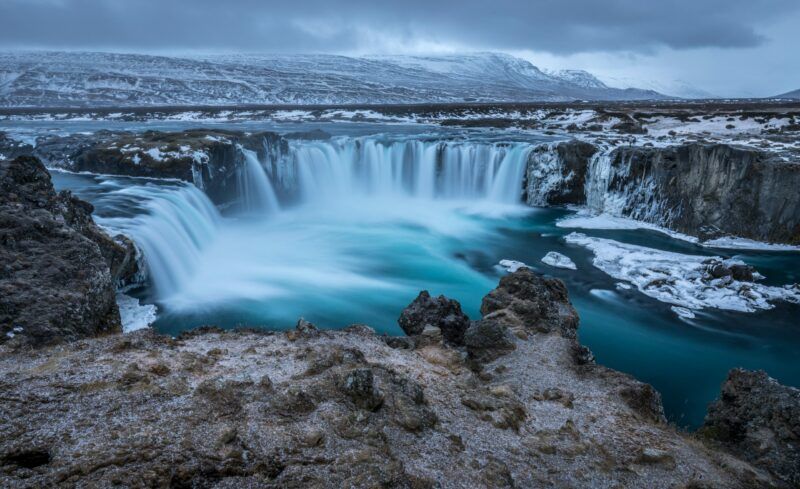
Time-lapse records a sequence to show change over time. Plan the interval, total duration, storage and power before beginning. It is a different output from a single landscape photograph and should be chosen because the change itself is worth showing.
The 30-second decision
TRY IT IF: a place has a clear relationship between subject, light and surroundings. Begin with one composition and one exposure you can explain.
CHANGE YOUR APPROACH IF: the photograph feels cluttered or lacks a subject. Move, simplify or choose a different focal length before adding another technique.
SPEND MORE ONLY IF: your current equipment prevents a specific result, such as a stable long exposure. Better planning and revisiting a location often matter more than a larger kit.
Discover more from GottaPics
Subscribe to get the latest posts sent to your email.


 Marian Florinel Condruz
Great article, the terminology in here is great and being that I am becoming more fascinated with taking photographs myself, I found this an exciting and informative read! Well done here and thanks for the great descriptions and amazing pictures!
Thanks mate, makes me very happy you enjoyed it. Cheers
Simply awesome…….love the writer
Glad you’ve enjoyed 🙂